
Liv Pure Review: A Better Premise Than Most, In A Capsule Too Small To Deliver It
Liver fat and metabolic dysfunction really are linked, and several ingredients here are aimed sensibly at that. Then the whole thing is packed into one capsule a day, which is where the arithmetic stops working.
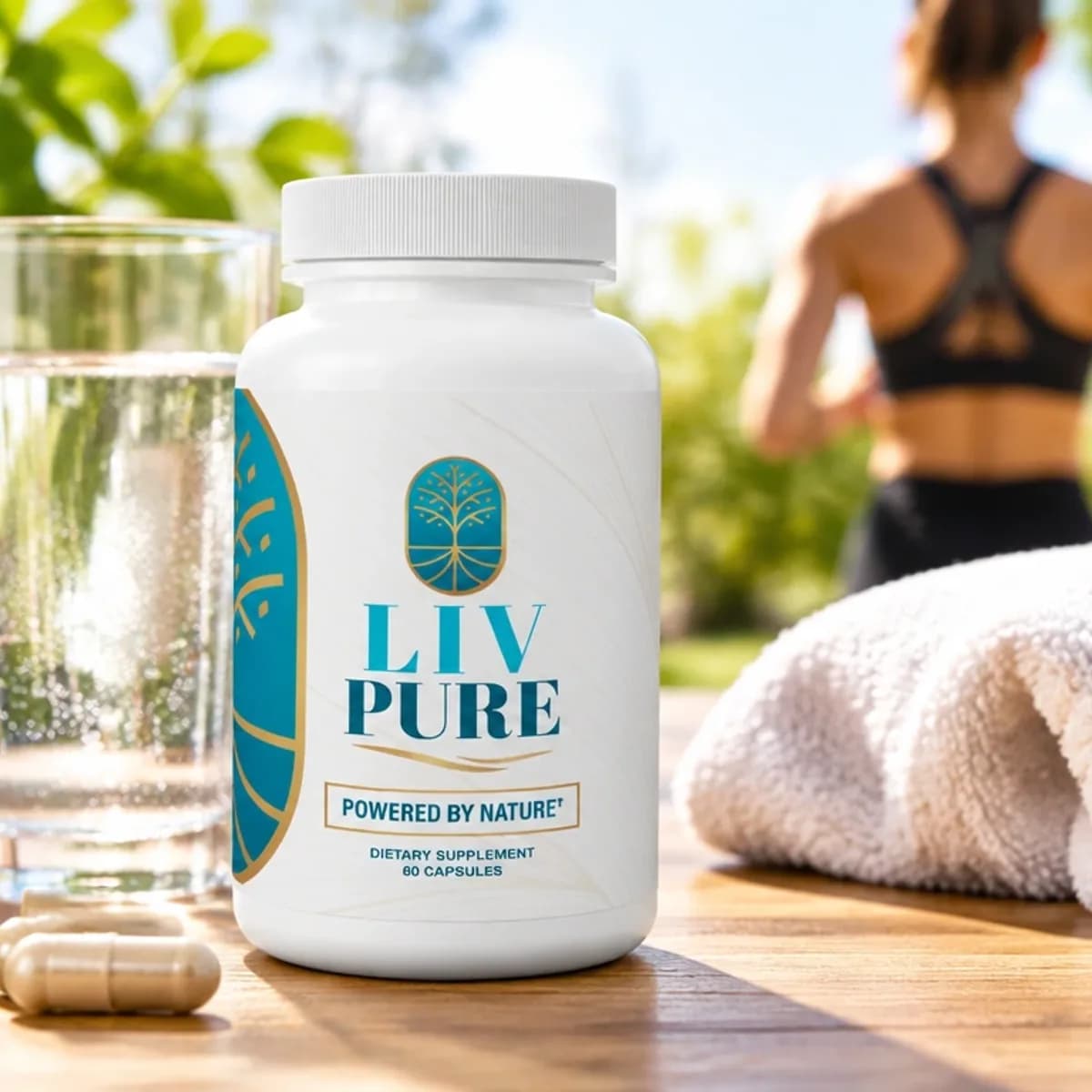
The verdict
Liv Pure
The premise is better than this category usually manages: liver fat genuinely does drive metabolic dysfunction, and berberine, choline and betaine are defensible things to point at it. The format defeats it. Berberine alone is studied at 1,000 to 1,500mg a day and choline's adequate intake is 425 to 550mg, and this is one capsule holding ten ingredients behind two proprietary blends. Good thinking, wrong vehicle.
- Best for:
- Nobody, as a complete answer. The ingredient shortlist is worth stealing and buying separately at disclosed doses
- From:
- $49 per bottle on the six-bottle pack
- Evidence quality
- 3.0
- Formulation
- 2.0
- Value
- 2.5
- Transparency
- 2.0
We are not currently linking to this product.
What we liked
- Targets liver fat, which is a real metabolic mechanism rather than an invented one
- Berberine, choline and betaine are genuinely relevant choices for that mechanism
- Silymarin is the most-studied liver botanical there is
- 60-day refund window that covers empty bottles
What gave us pause
- One capsule a day cannot hold studied doses of ten ingredients
- Two proprietary blends, so no per-ingredient amount is disclosed
- Oral glutathione is largely destroyed in the gut before it is absorbed
- Berberine has real drug interactions that the sales page does not raise
Liv Pure starts from a premise that is closer to real science than most of this category gets, and then puts it in a format that cannot carry it.
Both halves of that are worth explaining, because the first is the reason this scores as well as it does and the second is the reason it does not score higher.
The premise, which is the defensible part
Most weight-loss supplements invent a mechanism. This one borrows a real one.
Fat accumulating in the liver - now called metabolic dysfunction-associated steatotic liver disease, and for years before that non-alcoholic fatty liver disease - is common, is strongly associated with insulin resistance, and runs in both directions. Metabolic dysfunction drives liver fat, and liver fat worsens metabolic dysfunction. Pointing an intervention at hepatic fat is a legitimate thing to want to do.
What the marketing does with that is another matter. “Liver purification” implies an organ clogged with accumulated toxins that needs flushing out. The liver is a chemical processing plant, not a filter that fills up, and there is no clinical entity that “detoxing” it corresponds to. The real target here has a name and a diagnosis, and the copy would be stronger for using them.
What is in it
Ten ingredients in two named proprietary blends.
Liver Purification Complex: silymarin, betaine, berberine, molybdenum, glutathione.
Liver Fat-Burning Complex: camellia sinensis, resveratrol, genistein, chlorogenic acid, choline.
The ones with something behind them
Berberine is the strongest ingredient on the label. Meta-analyses report meaningful effects on fasting glucose, HbA1c and lipids, in some trials approaching what you would expect from an oral antidiabetic. It is not a lightweight, which is exactly why its dosing matters: the trials use 1,000 to 1,500mg daily, split across two or three doses because the half-life is short and the gastrointestinal tolerance is not good in one hit.
Choline is the most thoughtful inclusion. The liver exports fat as very-low-density lipoprotein, and that export requires phosphatidylcholine. Choline deficiency is one of the few nutritional deficiencies that reliably produces fatty liver in humans. The adequate intake is 425mg daily for women and 550mg for men.
Betaine works as a methyl donor in the same hepatic pathways, with a small NAFLD literature behind it. The studied doses are measured in grams.
Silymarin, from milk thistle, is the most-studied liver botanical in existence. The honest summary is mixed: the Cochrane review of alcoholic and hepatitis B or C liver disease found no convincing effect on mortality, while the smaller NAFLD trials have been more encouraging.
Chlorogenic acid and camellia sinensis carry the same modest, replicated metabolic research they carry everywhere else on this site. Small effects, real ones.
The ones lengthening the label
Glutathione taken orally is largely hydrolysed into its constituent amino acids before it reaches circulation. A study of a single 3g oral dose found no rise in circulating glutathione at all. Whatever this ingredient does on the label, it is not doing much in the bloodstream.
Molybdenum is a genuine trace mineral and a cofactor for sulfite oxidase. Deficiency is essentially unknown outside rare genetic disorders and long-term parenteral nutrition. It is not a toxin flush.
Resveratrol has poor oral bioavailability and a human trial record that has consistently failed to match the enthusiasm of the cell studies.
Genistein is a soy isoflavone and a phytoestrogen. Worth knowing about rather than alarming, but it belongs in a conversation with a doctor if you have a hormone-sensitive condition.
Value
At $49 per bottle on the six-bottle pack this is priced like the rest of the category. The 60-day guarantee covers opened and empty bottles, which lowers the cost of finding out.
The sharper comparison is not against other blends. Berberine as a standalone at 500mg, taken twice daily as the trials did, costs a small fraction of this and you know what you are taking. The same is true of choline. If the shortlist on this label is the right shortlist, and it largely is, then the cheaper and more honest route is to buy the two or three that matter at doses you can read.
Who this is and is not for
Reasonable fit: nobody, as a complete answer. The ingredient thinking is worth taking; the capsule is not the way to take it.
Poor fit: anyone expecting this to address diagnosed fatty liver. That is managed with weight loss, alcohol reduction and treatment of the associated metabolic conditions, under a doctor who can measure whether it is working.
Talk to a doctor first if you take glucose-lowering medication, because berberine lowers glucose and the effects stack. Also if you take a statin, a transplant medication or anything else with a narrow therapeutic window: berberine inhibits CYP3A4 and P-glycoprotein, which is the same interaction route that makes grapefruit a problem. Avoid in pregnancy and while breastfeeding.
The verdict
2.4 out of 5. Better thinking than most of the shelf, defeated by a capsule too small to act on it.
The premise is sound, the shortlist is sensible, and the format makes both unverifiable. When a product picks ingredients this dose-dependent and then hides them behind a proprietary blend in a single daily capsule, the burden is on the label to show the amounts, and it does not.
What we could not verify
We have not tested this product. We do not test any product on this site. Checked against the official page on 3 October 2026.
Verified: the 60-day refund window covering empty bottles, and the pricing down to $49 a bottle on the six-bottle pack.
Not verifiable: Liv Pure publishes no supplement facts panel on its official page, so no amount can be checked. No certificate of analysis, no named manufacturer, no trial on the finished formula.
One warning while you are searching. Two domains answer to this product’s name.
liv-pure.com is the vendor’s own funnel. getlivpure.com titles itself
“Livpure Official Website” and is not it; its content is an ingredient analysis
with its own citations. Whatever its merits, it is not the manufacturer, and a
dose quoted from it is not a dose from the label. Searching “livpure” has a
second trap too: most of the results are an Indian water purifier brand of the
same name.
Every published figure here also appears in the dose gap, with its source and the date we read it. How these scores are arrived at is set out in how we review, and the evidence hierarchy is on research standards.
References
- 1.Lan J, et al. Meta-analysis of the effect and safety of berberine in the treatment of type 2 diabetes mellitus, hyperlipemia and hypertension. Journal of Ethnopharmacology, 2015.
- 2.Corbin KD, Zeisel SH. Choline metabolism provides novel insights into nonalcoholic fatty liver disease and its progression. Current Opinion in Gastroenterology, 2012.
- 3.Rambaldi A, Jacobs BP, Gluud C. Milk thistle for alcoholic and/or hepatitis B or C virus liver diseases. Cochrane Database of Systematic Reviews, 2007.
- 4.Witschi A, et al. The systemic availability of oral glutathione. European Journal of Clinical Pharmacology, 1992.
- 5.Onakpoya I, Terry R, Ernst E. The use of green coffee extract as a weight loss supplement: a systematic review and meta-analysis of randomised clinical trials. Gastroenterology Research and Practice, 2011.
- 6.Feng X, et al. Berberine in cardiovascular and metabolic diseases: from mechanisms to therapeutics. Theranostics, 2019.